I am an interdisciplinary scholar-writer-teacher-environmental activist working to co-create sustainable peace regionally and globally. As Co-Founder of BioEarth and the Executive Director of the Institute for Peace, Spirit, and Environment (IPSE), I believe that if we are honest and insightful enough to examine the root causes and dynamics that perpetuate climate change, violence, and inequity, we will find the courage to embrace the paradigm shift needed to create a livable future: recognizing our genuine interconnectedness and interdependence, which is an ecological, social, and spiritual reality. This shift in perception will change destructive systems in the blink of an eye. Together, we can create a world with greater harmony, balance, justice, beauty, and dignity for all beings.
“The present moment of climate crisis calls for humans to reawaken to the possibilities of renewed relationships with one another, animals, the earth, and the divine. This will demand our collective wisdom, deep listening, compassion, and grief-tending. Yet once we can clearly envision the future we want to have, I believe we will find the courage to bring it about. With our combined efforts, we can co-create a world of sustainable peace.“
Please join the global One Billion for Peace movement today by signing this pledge: “To be sustainable, peace entails the physical, material, psychological, cultural/religious, and ecological well-being of all. I commit myself to peace.”
Go to http://www.bioearth.org to join our global movement of sustainable peace and network of education and social action. Together, we help build ecological and societal resiliency in the face of climate crisis. Sign up your organization too, because Local + Local + Local = Global.
Coming soon from Frances Flannery (Bloomsbury/T&T Clark): The Climate Covenant (Vol. 1 ), Kinship with all Beings (Vol. 2), To Serve the Garden (Vol. 3): An Ecological Reading of the Bible
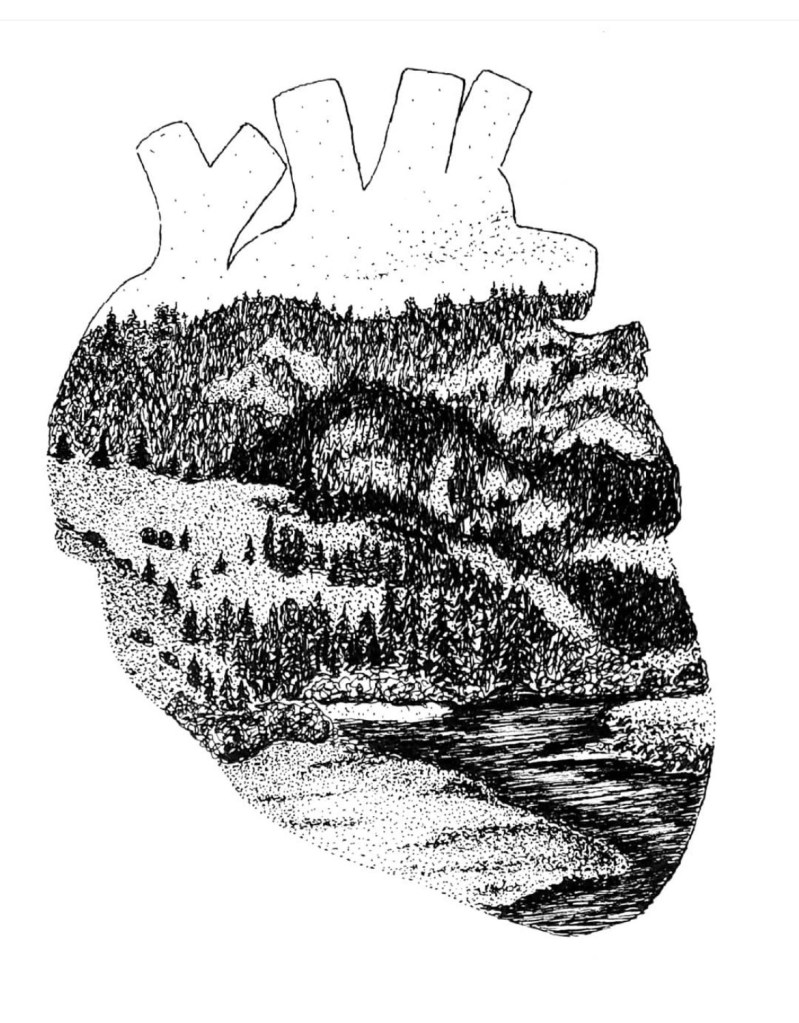
Cover illustrations by Anna Kelleher, copyrighted.
The Climate Covenant: An Ecological Reading of the Bible, Volume One (Bloomsbury: forthcoming 2027):
What if the Bible didn’t see humans as separate from nature? What would change in our hearts, minds, and behavior if the Bible portrayed Earth as our proper home, including even after our death? What if the first story in the Bible showed God creating both humans and non-human animals as potential life partners, created out of the same stuff and in the same way, and what if we all had souls? How would our attitudes shift, if the Bible claimed that the Earth and Sea also have souls? What would change if the Bible viewed humans as being made “in the image of God” (Gen. 1:27) not because of our physical form, but because we are uniquely assigned the task of serving the plants and animals of the earth and guarding its climate? What would shift within us and in our actions if the Bible portrayed the Divine as Water, Wind, Rock, and Fire, as well as Lamb, Cow, Lion, Eagle, and Horse?
In fact, the Bible does say all these things. However, these themes haven’t made their way into the English translations that have been popular for centuries. This first volume in the trilogy examines the Hebrew Bible/Old Testament in its original Hebrew language in the context of the historical, archaeological, and literary evidence to uncover the deeply ecological layers that have been missed in a host of biblical texts. What emerges is a new portrait of divinity that is both transcendent and tangibly present in the elements of the natural world, including Wind, Rock, Fire, Darkness, Light, and Waters.
It is my sincere hope is that this book will make you re-examine your assumptions about the Bible, God, our identity as human-beings (or Dirtlings, in the biblical language), and our relationships with the other beings in this created world. My greatest hope for this volume and for the whole trilogy is that reading the Bible in this way will help inspire us to live more thoughtfully, sustainably, and compassionately in this time of climate crisis. To make this message even more accessible, the volume has inspired a forthcoming podcast by the same name: The Climate Covenant.
(Note: This book began in earnest in the summer of 2022 while I was a Trinity College Longroom Hub Visiting Research Fellow in Dublin Ireland. Thank you to Dr. Jacob Erickson for being my faculty sponsor and to all the staff, students, and colleagues of the marvelous Longroom Hub).
Other Featured Publications:
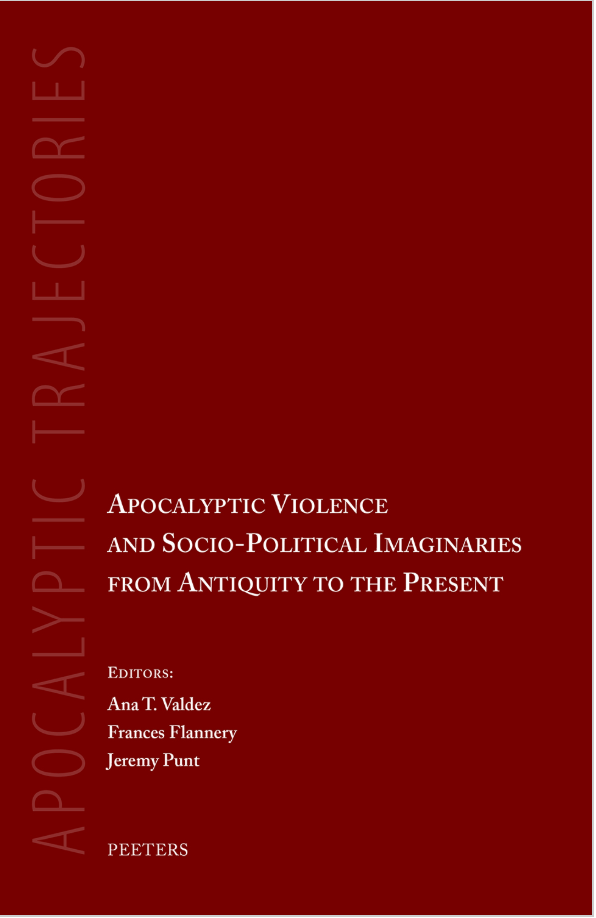
Ana T. Valdez, Frances Flannery, Jeremy Punt, eds.
Apocalyptic Violence and Socio-Political Imaginaries from Antiquity to the Present (Peeters, 2026)
Overview: Apocalyptic Violence and Socio-Political Imaginaries from Antiquity to the Present is an innovative collection of essays that traces the enduring power of apocalyptic thought across centuries. From ancient Jewish texts to modern extremist movements, leading international scholars explore how visions of the “end times” have inspired hope, resistance, and—too often—violence. Essays examine divine violence in the Bible, revolutionary fervor in Jewish and Christian traditions, the violent undercurrents in Paul and Revelation, and the apocalyptic imagination fueling modern ideologies from fascism to terrorism. Alongside these darker themes, contributors also highlight traditions of tolerance, dialogue, and renewal within apocalyptic discourse. Born out of a groundbreaking international symposium in Lisbon, this volume bridges religious studies, political science, and history to reveal how ancient eschatological expectations continue to shape today’s socio-political conflicts. Rich in insight and global in scope, it is essential reading for anyone interested in religion, violence, and the future of humanity.
Impact: This is the inaugural volume in Peeters’ Apocalyptic Trajectories series, which explores the influence of apocalyptic thinking throughout history on a host of socio-political-religious realities. Contributors include: Louis Jonker, John J. Collins, Jeremy Punt, Anathea E. Portier-Young, Paul Middleton, Ana T. Valdez, Jesper Høgenhaven, Maura Hametz, Alastair Lockhardt, and Frances Flannery.
The Bible and Political Debate: What Does it Really Say? (Bloomsbury, 2016)
Overview: I and Rodney A. Werline, Ph.D. co-edited this volume because politicians and pundits regularly invoke the Bible in social and political debates on a host of controversial issues, while often citing and interpreting it entirely out of context. Lacking biblical literacy, society is at the mercy of whatever power wishes to use the Bible as a social or political weapon. This groundbreaking book includes essays by fourteen expert biblical scholars who examine the original historical contexts and meanings of the biblical verses that are commonly cited in political discourse. The contributors take a non-confessional approach rooted in non-partisan scholarship, showing how specific texts have at times been distorted in order to support particular views. The volume represents one of the first collective efforts by members of the Society of Biblical Literature (SBL) to reach the public square with accessible biblical scholarship, and concludes with an essay by then Executive Director of the SBL John Kutsko.
Impact: The book has been reviewed with acclaim by Religion News Service, Newsweek, Salon, The Expository Times, and others and it continues to spawn interest in the form of invited scholarly and public talks and podcast appearances. It appears in numerous university courses worldwide. Contributors include: Jack Levison, Andrew Klumpp, Hector Avalos, Bert Jan Lietaert Peerbolte, Frances Flannery, Rodney A. Werline, Jonathan L. Jackson, Colleen Shantz, Daniel K. Falk, Judith Newman, Emerson B. Powery, Christopher Rollston, Kelley N. Coblentz-Bautch, and John Kutsko.
Understanding Apocalyptic Terrorism: Countering the Radical Mindset (Routledge, 2016)
Overview: I wrote this book for practitioners and the public after almost a decade of teaching its contents in courses for Intelligence Analysis students and presenting on this method to analysts in Intelligence Analysis agencies in five countries. My goal was to challenge an inadequate securitized definition of “peace” that was not at all peaceful and not sustainable and to change flawed approaches to counter-terrorism that end up generating more terrorists and violent extremists in the long-run.
By identifying the patterns throughout history that distinguish violent apocalyptic believers from non-violent believers, I offer a formula of “radical apocalypticism” that sheds new light on the worldview, motivations, and actions of apocalyptic terrorist groups. At the time of its publication, most of the emphasis in the US Intelligence Community focused on combatting Islamist extremism, often with little understanding of how this political system differed from the vast majority of Islam. My evidence-based approach demonstrates that the framework of radical apocalypticism cuts across most religions and cultures. In the US context, I raised awareness of Christian extremism (domestic terrorism) and the future challenge of genuine eco-terrorism, which needs to be distinguished more carefully from eco-activism.
Impact: This book is used in university courses around the world and was required reading for Intelligence Analysts training in the Canadian federal government. The book has also been featured in several international scholarly conferences, including the first joint session of the Protestant and Muslim graduate seminaries at Vrie University, Amsterdam, The Netherlands and the 2023 Apocalyptic and Violence in the Name of God conference at the University of Lisbon, Portugal, co-organized by scholars Ana T. Valdez and Telma Amorim and funded by School of Arts and Humanities (FLUL), Foundation for Science and Technology (FCT), and the American Corners-Portugal (US Embassy in Lisbon). This conference in turn generated the volume listed above, Apocalyptic Violence and Socio-Political Imaginaries from Antiquity to the Present, Ana T. Valdez, Frances Flannery, and Jeremy Punt, eds (Peeters, 2026).
Overview: Nicolae Roddy, Ph.D. and I virtually gathered together a cadre of international scholars who had been influenced by the scholarship and humanity of our former Professor J. Kenneth Kuntz, University of Iowa. We were all excited to present him with this labor of love, which turned out to be timely before his passing two years later. May his memory always be a blessing.
The editorial process was more challenging than usual, as our project overlapped with the height of the covid-19 epidemic. Several contributors had to pull of the volume due to family and/or health issues. Still, the resulting volume is impressive in its novel approach and scope. It utilizes the tools of biblical scholarship and theology to examine the theme of “wisdom” in the biblical wisdom corpus (Proverbs, Ecclesiastes, Job, Song of Solomon, and some Psalms) both as it related “Then” to ancient Israel and early Judaism and as it relates “Now” in its reception and intersection with a host of contemporary challenges, including climate change, ecological devastation, social divisions, isolation, and healing from trauma. Contributors include: Alan J. Hauser, Katherine J. Dell, Rodney A. Werline, Lowell K. Handy, Frances Flannery, Chris Vanlandingham, Iain Provan, Charles A. Packer, and Beth LaNeel Tanner, Rachel Wagner, and Nicolae Roddy.
Impact: In addition to appearing in college courses, book clubs, and Sunday schools, we are honored that the book has had such as wonderful reception by esteemed colleagues, including both biblical scholars and theologians:
“This collection of essays in honor of Ken Kuntz does exactly what such a collection can do best. It permits contributors great freedom to move in new interpretive directions. It permits all of these probes to cluster around a common theme, in this case, wisdom. And it offers suggestive linkages to the work of the honoree. This collection of essays offers fresh perspective and makes important links between the work of the text and the deep crises of our society. It reflects on the “fractured morality” in a world where God’s governance is at best hidden. It is suitable offer of tribute to Ken Kuntz. I am glad to add my affirmation to this salute to my friend and school mate.”
—Walter Brueggemann, Columbia Theological Seminary, Decatur, Georgia, USA
“This collection of essays is an excellent and well-deserved tribute to J. Kenneth Kuntz, beloved teacher, friend, and scholar, whose keen insights into wisdom literature has made an enduring contribution to biblical scholarship. Thematically centered on how wisdom literature continues to speak to a wide range of contemporary issues (e.g., refugees and immigrants, ecology and environmental crises, sustainable scholarly practices, wise leadership, and discrimination in the #MeToo Era), these essays ably reflect the “scholarly broadmindedness” of this incredible “ambassador of ancient texts.” Hearty congratulations, Ken!”
—Samuel E. Balentine, Professor of Old Testament Emeritus, Union Presbyterian Seminary, USA
“Few topics in biblical studies stimulate reflection on the present state of things as readily as wisdom does. In this unusually coherent but wide-ranging volume, Flannery and Roddy have assembled excellent studies of wisdom that both investigate its early history and explore its significance for the contemporary world. In this fitting tribute to the work of J. Kenneth Kuntz, readers will find substantive contributions to current scholarship as well as stimulating essays on surprising aspects of wisdom that have become conspicuous in recent years.”
—Michael C. Legaspi, Associate Professor of Classics and Ancient Mediterranean Studies, Pennsylvania State University, USA
“Of the many students Professor J. Kenneth Kuntz taught across the years, some became professors themselves. The superb essays in this book testify to the success of both his labors and theirs. Employing varieties of methods, the essays explore wisdom literature in the ancient biblical world and connect the findings to contemporary issues. Politics, economy, ecology, othering, gender and intersectionality indicate the wide range of connections. Analyses of the past illuminate the present. In so offering tributes to their esteemed professor, these talented teachers provide rich nourishment for receptive readers. Thereby this first-rate Festschrift becomes a blessing.”
—Phyllis Trible, Baldwin Professor Emerita of Sacred Literature, Union Theological Seminary, New York, USA